Why ESG Adoption Is Critical for Pakistan’s Economic Resilience and Global Market Access?
By ESG Nexus 6 min read

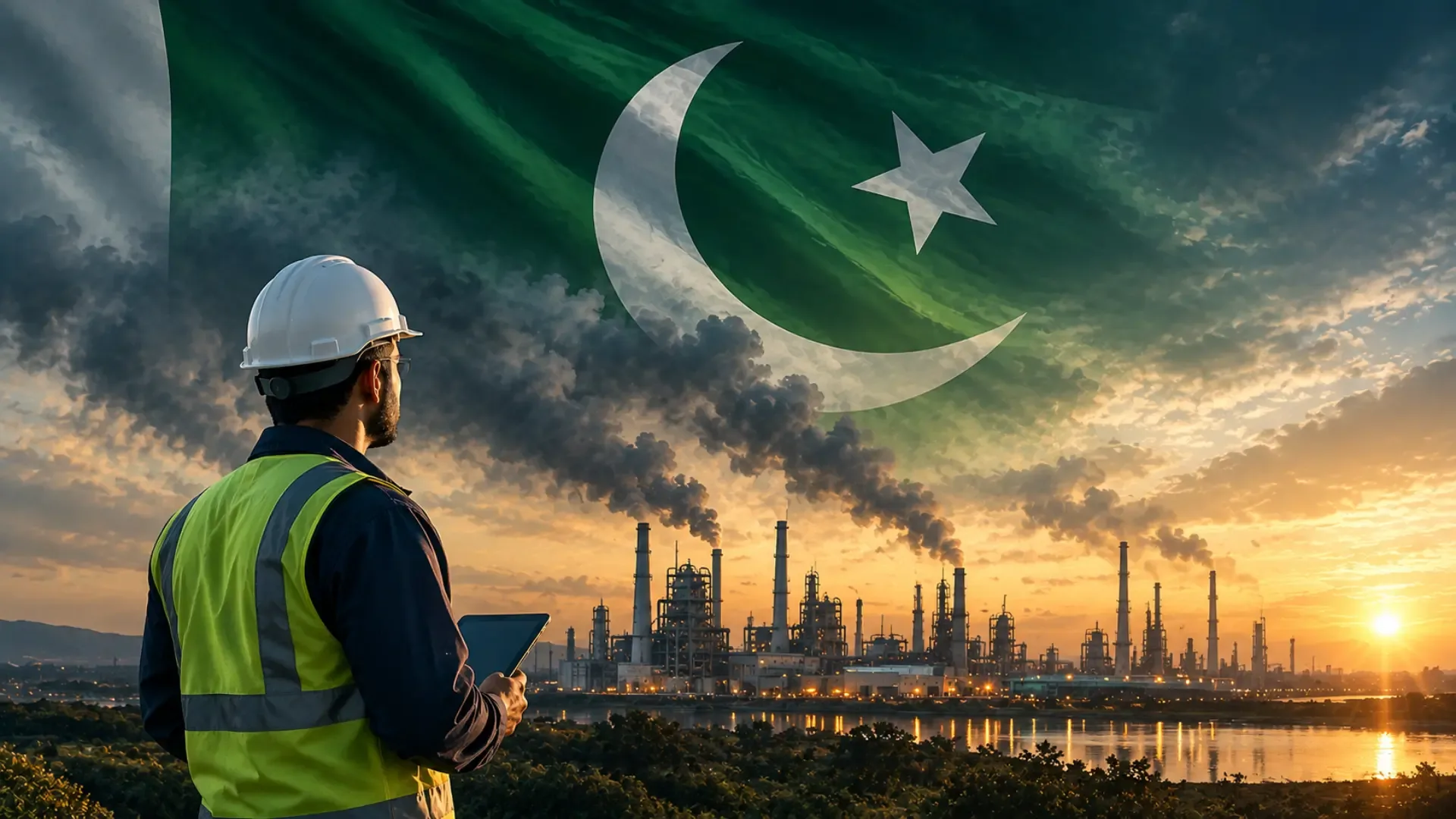
Environmental, Social, and Governance integration is rapidly emerging as one of the most important structural priorities shaping the future of Pakistan’s economic resilience, export competitiveness, and institutional credibility. While ESG adoption initially gained traction in developed capital markets as a transparency framework for investors, it is increasingly functioning as a strategic operating model for countries navigating climate vulnerability, governance reform requirements, and global trade alignment pressures. For Pakistan, ESG is no longer a voluntary corporate agenda. It is becoming a national competitiveness imperative.
Pakistan faces a convergence of structural challenges that make ESG adoption particularly urgent. Climate vulnerability continues to threaten infrastructure stability and agricultural productivity. Governance expectations from international lenders and investors are strengthening. Export markets increasingly require supply-chain transparency aligned with sustainability standards. At the same time, demographic pressures demand inclusive employment generation and social mobility pathways capable of supporting long-term development stability. ESG provides a structured framework through which these interconnected challenges can be addressed simultaneously rather than in isolation.
Across global markets, ESG is increasingly interpreted as a signal of institutional readiness rather than corporate positioning alone. Countries that embed sustainability transparency into regulatory architecture strengthen access to capital, improve export-market positioning, and enhance investor confidence. For Pakistan, accelerating ESG integration therefore represents not only an environmental or social responsibility objective but a strategic pathway toward long-term economic resilience.
Understanding ESG in the Pakistani Institutional Context
In Pakistan’s policy environment, ESG integration must be interpreted differently from the way it is applied in mature disclosure markets. Rather than functioning solely as a corporate reporting framework, ESG operates as a cross-sector coordination mechanism linking environmental resilience, labour-market inclusion, governance transparency, and financial-system credibility. This broader interpretation reflects the country’s development priorities and its exposure to climate and institutional risk factors simultaneously.
The three pillars of ESG can be understood within Pakistan’s national context as follows:
ESG Pillar | National Priority Alignment |
|---|---|
Environmental | Climate resilience and resource security |
Social | Workforce inclusion and human-capital development |
Governance | Institutional transparency and investor confidence |
Environmental priorities include strengthening climate-adaptation infrastructure and improving water-resource management systems critical for agricultural stability. Social priorities focus on labour-force participation, education access, and reducing inequality across urban and rural populations. Governance priorities centre on strengthening transparency mechanisms capable of supporting investor confidence and improving institutional credibility within global markets.
Because these pillars interact closely within Pakistan’s development trajectory, ESG integration functions as a coordination framework linking policy reform with economic-growth strategy rather than as a standalone sustainability initiative.
Why Climate Risk Makes ESG Integration Urgent for Pakistan
Pakistan consistently ranks among the world’s most climate-vulnerable countries. Extreme weather events, shifting rainfall patterns, and rising temperatures are already affecting infrastructure reliability, agricultural productivity, and water availability across multiple regions. The 2022 floods demonstrated the scale of climate-related economic disruption the country faces and highlighted the importance of embedding climate-risk planning within national development strategy.
ESG-aligned environmental governance supports climate resilience by encouraging:
Climate Priority | ESG Contribution |
|---|---|
Disaster preparedness | Risk-informed infrastructure planning |
Renewable energy adoption | Reduced fossil-fuel dependence |
Water management | Sustainable agricultural productivity |
Urban resilience | Climate-ready city planning |
Energy transition represents one of the most important areas where ESG alignment can strengthen Pakistan’s macroeconomic stability. Reducing dependence on imported fossil fuels improves fiscal resilience while supporting emissions-reduction commitments aligned with international climate-finance expectations. At the same time, improved environmental governance strengthens Pakistan’s eligibility for climate-adaptation funding from international development institutions increasingly prioritising ESG-aligned investment frameworks.
For Pakistan’s infrastructure-development trajectory, climate-risk management is therefore not a sustainability preference. It is a national economic necessity.
Why the Social Pillar of ESG Is Central to Pakistan’s Long-Term Growth Stability
Pakistan’s demographic structure represents one of its greatest development opportunities as well as one of its most important policy challenges. A rapidly growing labour force creates potential for economic expansion, but this potential can only be realised through workforce inclusion strategies aligned with education access, gender participation, and skills-development pathways. ESG integration provides a structured framework through which these priorities can be addressed at both institutional and corporate levels.
Key social priorities supported through ESG alignment include:
Social Priority | Strategic Outcome |
|---|---|
Labour-rights protection | Improved workforce productivity |
Gender inclusion | Expanded economic participation |
Education investment | Higher human-capital quality |
Community development | Reduced inequality gaps |
Increasing labour-force participation among women alone represents one of the most significant opportunities for improving Pakistan’s long-term economic growth trajectory. Similarly, expanding access to technical education aligned with emerging green-economy sectors strengthens workforce readiness for industries expected to shape future employment demand.
Because export competitiveness increasingly depends on supply-chain transparency regarding labour practices and workplace conditions, strengthening the social pillar of ESG also supports Pakistan’s integration into global manufacturing and textile markets.
Why Governance Reform Is the Foundation of ESG Adoption in Pakistan
Governance represents the enabling pillar that determines whether environmental and social priorities can translate into measurable development outcomes. Without transparent reporting structures, consistent regulatory enforcement, and reliable institutional coordination mechanisms, ESG frameworks cannot scale effectively across industries. For Pakistan, strengthening governance alignment with ESG expectations is therefore central to improving investor confidence and unlocking sustainable financing opportunities.
Governance-driven ESG integration supports:
Governance Objective | Economic Impact |
|---|---|
Transparency improvements | Increased investor confidence |
Anti-corruption frameworks | Lower financing risk perception |
Disclosure alignment | Stronger export credibility |
Regulatory consistency | Long-term policy stability |
International investors increasingly evaluate governance quality before committing capital to emerging markets. ESG-aligned disclosure frameworks help reduce information asymmetry between investors and domestic institutions, improving Pakistan’s positioning within global capital-allocation decisions.
Strengthening governance transparency therefore supports both institutional credibility and macroeconomic resilience simultaneously.
How ESG Integration Strengthens Pakistan’s Export Competitiveness and Access to Finance
Global trade relationships increasingly depend on sustainability transparency across supply chains. European and North American markets in particular are strengthening ESG-related import expectations affecting textile manufacturing, agriculture, and industrial production sectors. Companies operating without ESG disclosure alignment risk losing market access as procurement ecosystems introduce sustainability-screening requirements across supplier networks.
ESG integration supports export competitiveness through:
Strategic Area | Benefit |
|---|---|
Supply-chain transparency | Improved buyer confidence |
Sustainability reporting | Alignment with global standards |
Climate-risk disclosure | Financing eligibility improvement |
Green-finance readiness | Access to concessional capital |
International development institutions including the World Bank and Asian Development Bank are increasingly linking infrastructure financing and policy-support programmes to sustainability alignment indicators. Strengthening ESG readiness therefore improves Pakistan’s eligibility for concessional financing and climate-transition investment opportunities.
For export-oriented sectors forming the backbone of Pakistan’s manufacturing economy, ESG adoption is becoming a prerequisite for maintaining long-term competitiveness within global markets rather than an optional reporting exercise.
How ESG Nexus Supports ESG Integration Across Pakistan’s Institutional and Business Landscape
Accelerating ESG adoption across Pakistan requires coordination between regulators, corporates, financial institutions, and professional communities capable of translating global sustainability frameworks into locally relevant implementation pathways. ESG Nexus was established to support this transition by bridging the gap between compliance expectations and strategic ESG integration across industries and policy environments.
Through research initiatives, institutional partnerships, capacity-building programmes, and policy engagement activities, ESG Nexus supports organizations in strengthening climate-risk management capability, improving disclosure readiness, and aligning governance frameworks with international sustainability expectations shaping investment and trade ecosystems globally. By advancing awareness across environmental, social, and governance priorities simultaneously, ESG Nexus contributes to building a stronger foundation for long-term resilience across Pakistan’s economic landscape.
As ESG expectations continue strengthening across international markets, collaborative platforms capable of aligning policy direction with corporate readiness will play an increasingly important role in supporting Pakistan’s transition toward sustainable and inclusive economic growth.