Beyond the Disclosure Delusion: Why Pakistan's ESG Moment Demands More Than Reporting
By ESG Nexus 6 min read

There's a dangerous comfort in the checkbox.
The Pakistan Stock Exchange now lists ESG guidelines. The Securities and Exchange Commission has issued roadmaps. Multinational buyers demand sustainability questionnaires. Banks speak of green financing. And across boardrooms in Karachi, Lahore, and Islamabad, executives are learning a new vocabulary—materiality assessments, stakeholder engagement, Scope 3 emissions.
The performance is convincing. The transformation is not.
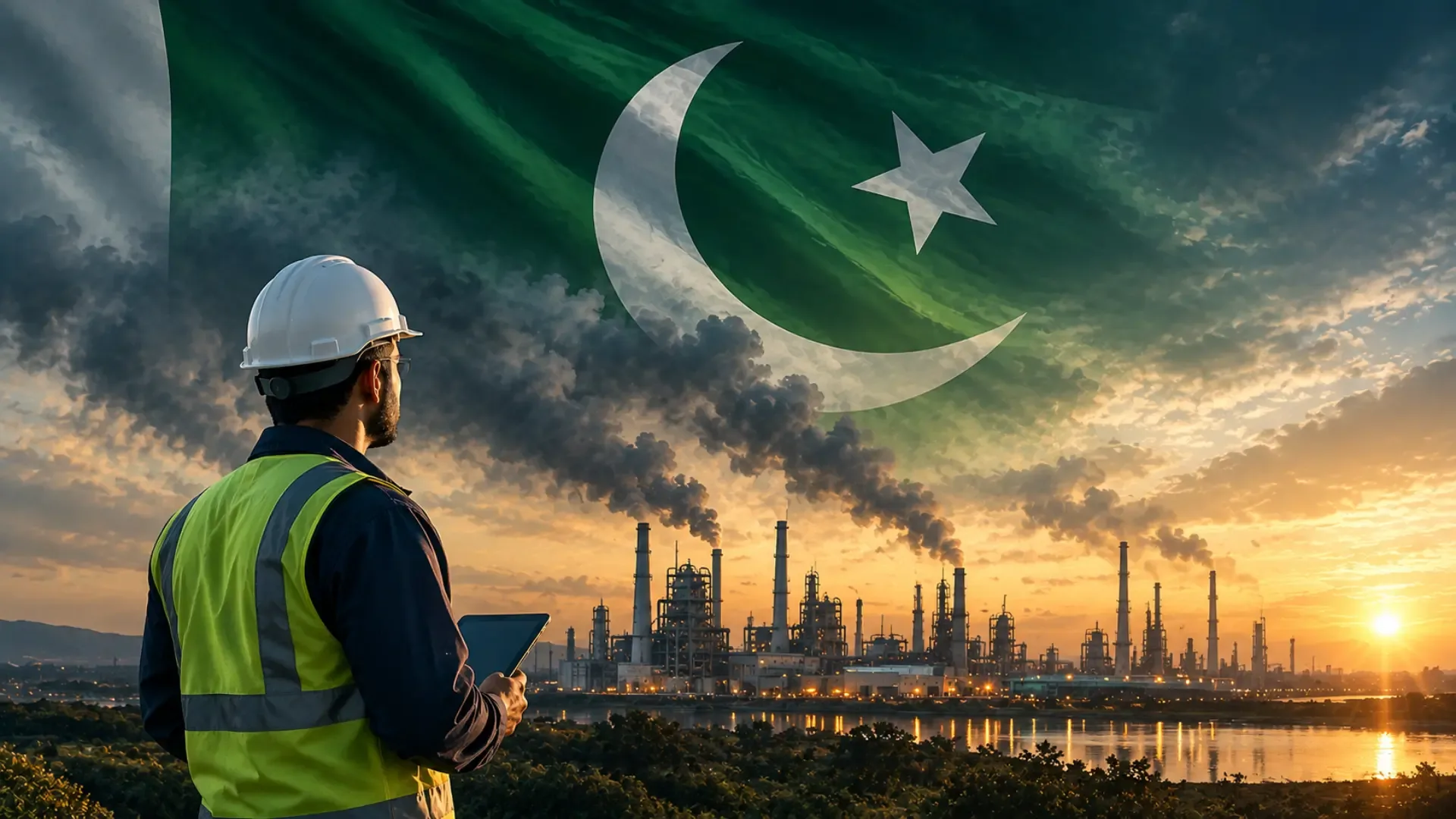
Pakistan ranks among the world's most climate-vulnerable nations. We face energy systems that fail when heat peaks. Water tables that drop while floods wash away infrastructure. Supply chains where informal labor bears costs that never reach balance sheets. These are not abstract risks. They are operational realities that determine whether businesses survive the next decade.
Yet ESG in Pakistan risks becoming exactly what its critics fear: a disclosure ritual that masks structural fragility rather than repairing it. Policies are published. Reports are printed. Commitments are announced. Meanwhile, emissions rise, aquifers deplete, and communities absorb costs they never agreed to bear.
This is where ESG Nexus operates. As Pakistan's government-certified platform for authentic ESG implementation; the bridge between regulatory expectation and operational reality, between global standard and local context, between compliance theater and genuine transformation.
The Pakistan ESG Paradox: Momentum Without Movement
The institutional signals are unambiguous. SECP's ESG roadmap. PSX's disclosure guidelines. International partnerships with IFC, GIIN, and global standard-setters. Pakistan is not ignoring ESG. It is adopting its forms while struggling with its substance.
Consider the landscape:
Reporting volume exceeds reporting quality. A majority of listed companies claim ESG disclosure. Fewer than a tenth provide decision-useful data—metrics that enable comparison, track trajectory, or expose risk. Most disclosures describe intentions. They rarely measure outcomes.
Regulation outpaces enforcement. Frameworks exist. Penalties for non-compliance remain theoretical. The rational corporate response? Invest in appearance rather than performance. Hire consultants to polish reports. Train staff to speak the language. Change little that affects core operations.
Capacity concentrates in large firms. Global reporting standards favor enterprises with dedicated sustainability teams, external assurance budgets, and relationships with international validators. Smaller suppliers—the backbone of Pakistan's economy—are excluded by design. ESG becomes a club for the privileged rather than infrastructure for the economy.
Capital pressure meets local reality. Multinational buyers and lenders demand ESG alignment. Pakistani businesses respond with documentation that satisfies distant reviewers while obscuring ground-level conditions. The result: a hollow sustainability economy that communicates fluently with investors but poorly with citizens.
This is not cynicism. It is structural diagnosis. And it explains why ESG Nexus exists not as optional advisory, but as necessary intervention.
What Authentic ESG Implementation Requires
The global ESG industry sells tools: reporting software, training modules, certification schemes. These reduce friction. They do not guarantee transformation.
Authentic implementation demands three disciplines that markets rarely reward sufficiently:
Internal Accountability
ESG cannot reside in sustainability departments while operations, finance, and procurement make decisions by other criteria. It requires governance integration—board-level oversight, executive compensation linked to non-financial metrics, and operational authority for ESG functions.
Most Pakistani businesses lack this structural integration. ESG is delegated. It is not owned. The result: coordination failures, data gaps, and commitments that dissolve when they conflict with quarterly priorities.
External Scrutiny
Disclosure without verification is narrative control. ESG Nexus operates as government-certified platform precisely because credibility requires institutional backing beyond corporate self-interest. Certification implies audit. Audit implies consequence. And consequence—enforcement, reputational risk, market exclusion—is what converts intention into behavior.
Stakeholder Inclusion
Global ESG frameworks emphasize stakeholder engagement. In practice, this often means consulting investors and ignoring communities. Authentic implementation in Pakistan requires reversing this: engaging workers in informal supply chains, communities in extraction zones, and customers in markets where consumer protection remains weak.
ESG that protects people must first hear people. This is methodology, not marketing.
The ESG Nexus Difference: Platform, Not Product
Pakistan's ESG ecosystem is fragmented. Consultants sell bespoke services. Regulators issue guidelines. Academics research. International validators certify. Businesses navigate this complexity alone, assembling piecemeal solutions that rarely cohere.
ESG Nexus operates as integrated platform—the only government-certified entity designed specifically to guide Pakistani businesses through this landscape with coherence rather than confusion.
Learning Infrastructure
Not training as information transfer, but capability building that persists. Modular curricula addressing Pakistan-specific challenges: water risk in textile supply chains, labor conditions in construction, energy transition in manufacturing, governance in family-owned enterprises. Content grounded in local context, not imported case studies.
Implementation Mentoring
Not advisory as report production, but embedded guidance through transformation. ESG Nexus mentors work with businesses to operationalize commitments: redesigning procurement to capture supplier ESG performance, restructuring incentives to reward long-term thinking, building data systems that enable genuine measurement.
Certification Integrity
Not validation as box-checking, but credibility that withstands scrutiny. Government certification implies standards enforced. ESG Nexus certification signals to international buyers, lenders, and partners that Pakistani businesses have undergone assessment that meets both global expectation and local enforcement.
Ecosystem Convening
Not isolated consulting, but collective progress. ESG Nexus convenes businesses, regulators, civil society, and international institutions to address systemic barriers that individual firms cannot solve alone: supply chain transparency, sectoral decarbonization pathways, and policy advocacy for enabling conditions.
The Hard Questions ESG Nexus Asks
Comfortable ESG avoids confrontation with power. It asks how to report better, not whether business models are sustainable. It seeks efficiency within existing structures rather than questioning those structures.
ESG Nexus operates from different premise. Meaningful sustainability requires asking questions that discomfort:
Who bears the environmental costs this business model generates?
Whose labor creates value captured elsewhere in the supply chain?
What governance arrangements concentrate decision-making and exclude accountability?
Which communities face risks from operations they did not choose?
How does this organization distribute benefits and harms across time—present consumption versus future resilience?
These questions are not hostile to business. They are essential to business continuity in a country where climate vulnerability, social inequality, and governance gaps already determine operational outcomes. The floods of 2022 did not discriminate between companies with ESG reports and those without. They discriminated between companies with resilient supply chains and those without. Between those with community relationships enabling rapid response and those without. Between those with governance structures enabling decisive adaptation and those without.
ESG that matters builds these capacities. ESG that decorates obscures their absence.
The Path Forward: From Disclosure to Resilience
Pakistan's ESG moment is real. The institutional momentum, capital pressure, and operational necessity are converging. The question is direction.
ESG can become corrective lens—forcing accountability, aligning incentives, directing capital toward resilience rather than repair. Or it can become imported vocabulary—impressive, expensive, disconnected from lives it claims to improve.
The difference lies not in framework selection but in implementation depth. Whether ESG challenges power or decorates it. Whether it builds capacity across economy or concentrates it in elite firms. Whether it protects people and planet or merely reports on them.
ESG Nexus exists to ensure the former outcome. As Pakistan's government-certified platform for ESG learning, mentoring, and certification, we provide infrastructure for transformation that markets alone cannot deliver.
The businesses that engage this platform early will not merely satisfy compliance requirements. They will build operational resilience against climate shocks, social instability, and governance failures that already determine competitive outcomes. They will capture preferential access to international supply chains and capital flows. They will demonstrate that profitability and sustainability are not trade-offs but complements—when sustainability is genuine rather than performed.
The ones that delay will find themselves scrambling to retrofit credibility when verification becomes mandatory, when buyers demand proof beyond promises, when climate impacts expose gap between disclosure and reality.
Your Move
Pakistan's ESG transition is not optional. It is operational necessity disguised as moral choice. The businesses that recognise this early will shape standards, capture advantage, and build resilience. The ones that wait will comply at higher cost and lower credibility.
ESG Nexus provides the platform for early movers. Government certification. Local context expertise. Implementation mentoring beyond report production. Collective ecosystem building.
The question is whether your business will lead this transition or follow it. Whether ESG will be your competitive advantage or your compliance burden.
The infrastructure exists. The certification is available. The transformation is possible.
What remains is decision.